
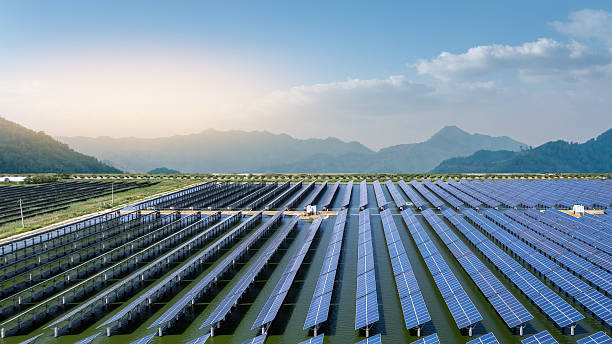
Zimbabwe’s Kariba Floating Solar Project Moves Towards Financial Close
Zimbabwe is nearing financial close on the Kariba Floating Solar Project, a landmark renewable energy development expected to strengthen the country’s electricity supply and position it among Africa’s leaders in floating solar technology.
Developed by Green Hybrid Power, a special purpose vehicle established by the Intensive Energy Users Group (IEUG), the project will initially generate around 250MW of electricity, with plans to expand capacity to approximately 600MW. Developers expect financing to be finalised later this year as engineering, budgeting and grid integration activities approach completion.
The floating solar facility will be installed on Lake Kariba, complementing the existing hydropower station by generating electricity during daylight hours while allowing reservoir water to be conserved for periods of lower solar output. The hybrid model is expected to improve grid reliability and reduce Zimbabwe’s dependence on climate-sensitive hydropower, which has been affected by recurring droughts and declining water levels.
Unlike ground-mounted solar farms, floating photovoltaic systems require no agricultural land and benefit from the cooling effect of water, which can improve panel efficiency while reducing reservoir evaporation.
The project comes as African countries accelerate investment in renewable energy to meet rising electricity demand, strengthen energy security and support economic growth. For Zimbabwe, expanding domestic generation is critical to addressing persistent power shortages that continue to affect mining, manufacturing, agriculture and other productive sectors.
Reliable electricity is particularly important for the country’s mining industry, including its rapidly growing lithium sector, where stable power supplies are essential for mineral processing and value addition. Improved electricity availability could enhance industrial competitiveness while reducing reliance on expensive diesel generators and electricity imports.
Project developers say discussions with potential financiers are progressing, with development finance institutions expected to play a significant role in supporting the investment. Regional lenders, including the African Export-Import Bank (Afreximbank), have shown increasing interest in financing strategic clean energy infrastructure across Africa.
The project also has regional significance. Lake Kariba is shared by Zimbabwe and Zambia and forms part of the Southern African Power Pool (SAPP), where additional renewable generation could strengthen cross-border electricity trade and improve regional energy security.
If financial close is achieved as planned, the Kariba Floating Solar Project will become one of Africa’s largest floating solar developments. Beyond increasing renewable energy capacity, it is expected to demonstrate how hybrid energy systems can improve electricity reliability, strengthen climate resilience and support long-term industrial development across Southern Africa.