
Zambia Launches Landmark Hybrid Solar-Storage Project
President Hakainde Hichilema has launched Zambia’s largest hybrid renewable energy project, marking a major step in the country’s efforts to strengthen grid reliability and expand clean power capacity.
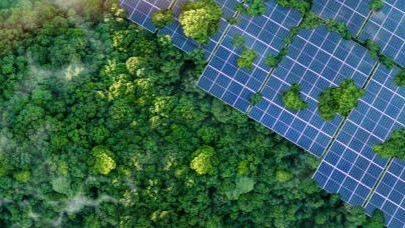
The Leopard’s Hill project, being developed by Globeleq near Chongwe District, around 25km from Lusaka, will combine 250 MWp of solar PV with a 150MW/600 MWh battery energy storage system (BESS). The battery component is designed to support renewable integration, manage peak demand and provide frequency and voltage regulation services.
Valued at US$315 million, the project is expected to reach financial close by the end of the year. It is being co-developed with Leopard Investment Company and is seen as a flagship example of Zambia’s recent energy sector reforms.
Speaking at the launch, President Hakainde Hichilema described the project as a critical move towards stabilising the national grid and diversifying the country’s energy mix. He noted that improved legislation and policy reforms had helped revive a project that had been delayed for nearly a decade.
Globeleq also signed a grid connection agreement with national utility ZESCO during the ceremony, reinforcing the project’s strategic role in the country’s long-term power plans. Construction is expected to begin in 2026 or 2027, subject to permitting, EPC appointment and financial close, with an estimated build period of 18 to 24 months. Peak construction is expected to create around 200 jobs, alongside 20 permanent operations and maintenance roles.
The development comes as battery storage economics continue to improve across Africa, with rising electricity prices and falling storage costs making hybrid systems increasingly attractive.
The Leopard’s Hill plant is expected to play a key role in supporting Zambia’s growing industrial and mining demand, while positioning the country for further solar expansion as it targets up to 1 GW of new solar capacity in the coming years.