
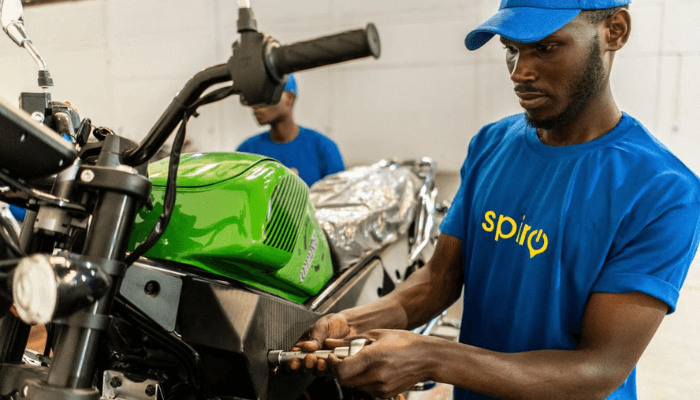
Spiro Secures $215 Million to Accelerate Africa’s Electric Mobility Infrastructure
African electric mobility company Spiro has secured $215 million in equity financing to support the expansion of its battery-swapping network and electric vehicle ecosystem across key African markets, highlighting growing investor confidence in the continent’s clean transport and energy transition sectors.
The funding round attracted institutional investors from Europe and Africa, including Denmark’s Impact Fund, reflecting increased appetite for scalable low-carbon transport solutions in emerging markets.
The company, which currently operates in Kenya, Rwanda, Uganda, Togo, Benin, Nigeria and Cameroon, plans to deploy the capital towards expanding its battery-swapping infrastructure, strengthening local vehicle assembly and manufacturing capabilities, and entering additional markets such as the Democratic Republic of Congo and Ethiopia.
According to Spiro, its network now includes approximately 100,000 electric vehicles and 2,500 battery-swapping stations across its operational footprint. The company says this infrastructure has helped make electric mobility more accessible and cost-effective for commercial riders and urban transport operators.
“This past year marked a significant strategic milestone for Spiro,” said Gagan Gupta, the company’s founder and chairman of Equitane. He noted that the business is positioning itself for a new phase of growth aimed at scaling affordable transport solutions across the continent.
The investment comes at a time when many African countries are seeking to reduce fuel import dependence, improve energy security and diversify transport systems amid volatile petroleum prices. Electric two-wheelers, which dominate urban mobility and delivery services in many African cities, are increasingly viewed as a practical pathway for reducing transport-related emissions and operating costs.
Spiro reports that users of its electric motorcycles can reduce daily transport expenses by as much as 40% compared with conventional petrol-powered alternatives. The company estimates savings of up to $2 per day for commercial riders.
Beyond vehicle deployment, Spiro is also investing in supporting energy infrastructure, including solar-powered battery-swapping stations and second-life battery storage systems. These initiatives could strengthen the integration of distributed renewable energy solutions while improving the sustainability of battery lifecycle management.
The company currently operates manufacturing facilities in Kenya, Rwanda and Uganda, alongside a battery recycling plant in Nigeria, underscoring the growing localisation of Africa’s electric mobility value chain.
While Africa’s electric vehicle market remains relatively small compared with more mature markets in Asia and Europe, investment activity continues to accelerate. Industry observers point to supportive government policies, rising fuel costs and innovative business models such as battery swapping as key drivers underpinning the sector’s growth trajectory.