Russia-Africa Summit Targets Energy Investment
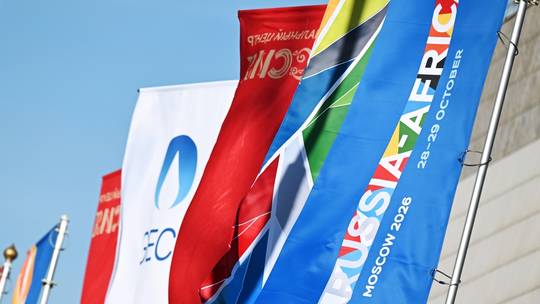
African leaders and Russian officials will meet in Moscow on 28–29 October for the third Russia-Africa Summit, with energy cooperation, infrastructure development and investment expected to feature prominently in discussions.
The summit comes as African countries seek to diversify international partnerships, strengthen domestic industries and secure financing for strategic infrastructure. Zimbabwe, Mali and Mozambique are among the countries represented by their presidents, alongside delegations from Ghana, Uganda and other African nations.
The meeting will establish cooperation priorities for 2027–2029, building on commitments made at previous summits in Sochi in 2019 and St Petersburg in 2023.
Energy and infrastructure in focus
Energy cooperation remains a significant component of Russia’s engagement with Africa, particularly in nuclear power, natural gas and resource development.
Russia’s state nuclear corporation, Rosatom, is constructing four reactors at Egypt’s El Dabaa nuclear power plant. It has also signed roadmaps to advance proposed nuclear power projects in Ethiopia and Rwanda, alongside plans for a nuclear science and technology centre in Rwanda.
For African economies grappling with electricity deficits and growing industrial demand, such partnerships present potential opportunities to expand generation capacity, develop technical expertise and support long-term energy security.
However, the commercial viability of these projects will depend on financing arrangements, implementation timelines and the ability to translate agreements into operational infrastructure.
Natural gas offers another avenue
The summit coincides with Moscow’s hosting of the eighth Gas Exporting Countries Forum (GECF) summit on 27 October, bringing additional attention to global gas markets, energy security and investment opportunities.
African GECF members include Algeria, Egypt, Equatorial Guinea, Libya and Nigeria. Angola, Mauritania, Mozambique and Senegal participate as observers.
Africa exported 39.77 million tonnes of liquefied natural gas (LNG) in 2025, an increase of 1.8 million tonnes from the previous year, according to the International Gas Union. Mauritania and Senegal entered the LNG export market through their joint Greater Tortue Ahmeyim project.
Russian companies also have established interests in African gas assets. Rosneft acquired a 30% stake in the concession containing Egypt’s Zohr gas field in 2017.
Trade ambitions meet implementation challenges
Russia-Africa trade increased from $16.8 billion in 2019 to $27.1 billion in 2025. However, the balance remains uneven: Russian exports accounted for $22.7 billion, compared with $4.4 billion in imports from Africa.
Discussions are expected to address industrial cooperation, transport infrastructure, payment mechanisms and barriers to trade, alongside wider collaboration in technology and agriculture.
For African energy stakeholders, the central question is whether expanding diplomatic engagement will deliver bankable projects, technology transfer, local industrial development and measurable investment.
The new cooperation framework will provide an indication of the priorities both sides intend to pursue over the next three years.