
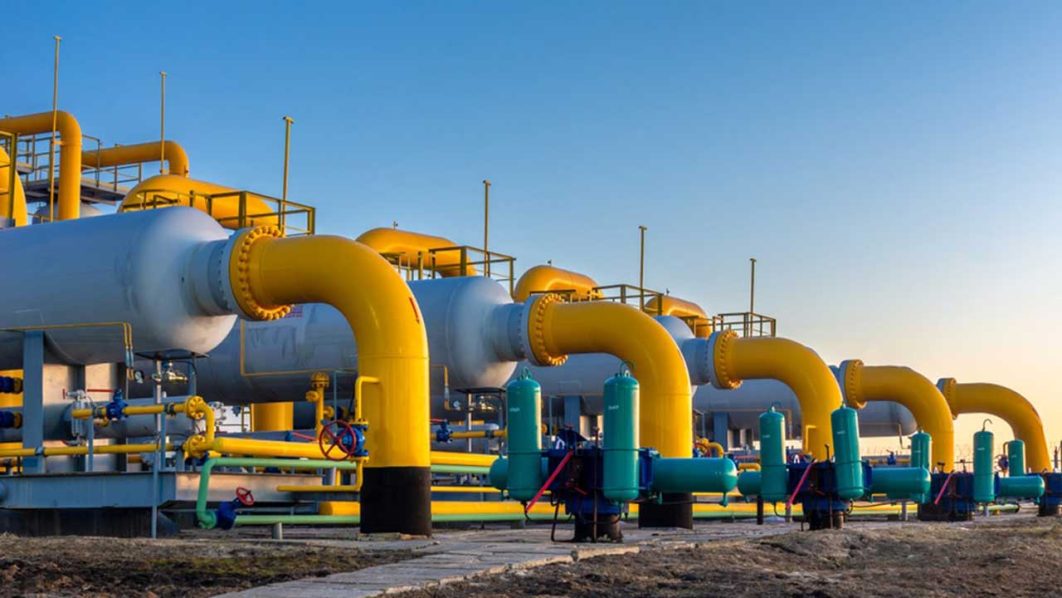
Pipelines, Power, And Positioning: What Nigeria’s OB3 Project Signals For Africa’s Energy Future
Major pipeline projects are often framed as engineering milestones. Nigeria’s River Niger crossing of the OB3 gas pipeline, constructed around two kilometres beneath the riverbed using horizontal directional drilling, is no exception.
Yet its significance extends well beyond engineering execution. It offers a practical lens into how Africa’s energy systems may evolve: from fragmented, project-based assets towards integrated, system-wide infrastructure.
Africa’s core energy challenge is not resource scarcity. The continent holds around 7% of global natural gas reserves, alongside vast solar and hydropower potential. Despite this, over 600 million people lack access to electricity. The constraint is structural rather than geological.
Energy resources exist, but they are unevenly distributed and poorly connected to demand centres. Weak transmission networks and limited transport infrastructure prevent efficient movement of energy across regions. The result is a systems deficit rather than a supply gap.
The OB3 pipeline in Nigeria is designed to address part of this challenge. It links gas production in the eastern Niger Delta to demand centres in the west, while feeding into the wider Ajaokuta–Kaduna–Kano (AKK) corridor. With a capacity of up to 2 billion standard cubic feet per day, its value lies less in scale and more in connectivity.
It connects gas supply to power generation, fertiliser production, and industrial clusters—sectors critical to economic development. This is particularly relevant in Nigeria, where gas accounts for over 70% of grid-connected electricity generation. The constraint has been delivery, not availability.
More broadly, such infrastructure highlights a key principle: energy value is unlocked through systems, not isolated assets.
The implications extend regionally. West Africa already has early-stage integration efforts, including cross-border pipelines and power pools, but these remain limited. Effective regional trade depends first on functional domestic networks. Internal integration precedes cross-border integration.
Investment dynamics reinforce this reality. Africa receives less than 3% of global energy investment despite a significant need. Integrated systems reduce risk, improve bankability, and attract capital.
Ultimately, engineering delivers infrastructure, but policy and governance determine whether it functions. Regulatory consistency, pricing frameworks, and cross-border coordination remain decisive.
The OB3 pipeline is therefore more than infrastructure. It is a signal that Africa’s energy future will depend less on resource endowment and more on system integration. Resources create potential. Infrastructure enables access. Integration delivers power.