
North Africa’s Emerging Power Corridor Could Strengthen Europe’s Energy Security

North Africa is gradually cementing its role as a key partner in the developing European energy landscape, with investment in cross-border electricity infrastructure set to support the established pattern of hydrocarbon trade.
The relationship between North Africa and Europe in terms of energy has, for a long time, relied on the importation of oil and natural gas, especially from countries like Algeria and Libya. However, a new pattern is developing, with a new dimension being added to the relationship in the form of electricity trade, driven by the expansion of renewable energy and new grid infrastructure.
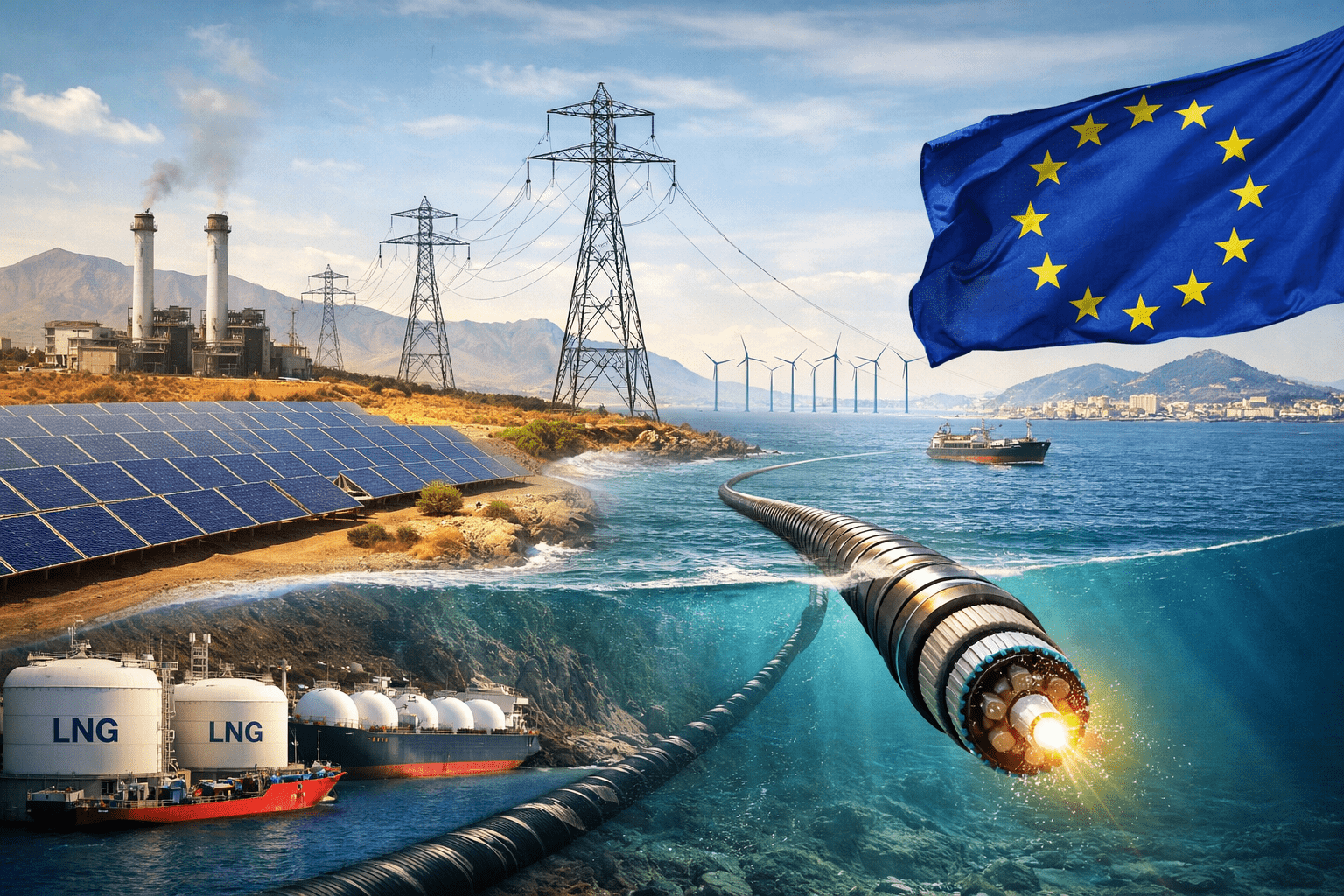
One of the most exciting prospects is the ELMED Interconnector project, a high-voltage subsea cable that will connect Tunisia with the Italian island of Sicily. The project is expected to be completed later in the decade and will allow for two-way electricity transmission of up to 600 MW, enabling North African electricity to be connected to European markets.
Whilst Libya’s electricity market still focuses on its own needs, the country is now being seen as a potential hub for a North African electricity corridor. Talks with its neighbours, Algeria and Tunisia, have included the possibility of connecting the countries’ electricity grids, a move that could eventually be extended to other Mediterranean electricity grids that supply electricity to Europe.
Such integration would allow electricity generated from gas-fired plants and renewable sources to move more freely across borders. For Libya, which holds substantial natural gas reserves and existing generation capacity, targeted investment in grid upgrades and renewable integration could support its transition from a hydrocarbon exporter to a regional electricity supplier.
This growing electricity trade is unlikely to displace Africa’s expanding LNG sector. Gas-rich producers such as Mozambique, Nigeria and the Senegal–Mauritania gas basin are already reinforcing the continent’s role in global gas supply.
Instead, electricity exports could complement LNG by providing stable, lower-carbon energy flows into Europe. Gas-fired power plants can deliver reliable baseload generation, while renewable energy — particularly solar — helps align supply with Europe’s decarbonisation targets.
These developments are expected to feature prominently at the Invest in African Energy Forum, where policymakers, utilities and investors will assess opportunities across power generation, transmission infrastructure and grid modernisation.
If planned interconnectors and regional grid initiatives progress, the Mediterranean’s energy landscape could expand beyond pipelines and LNG shipping routes to include high-voltage electricity trade linking Africa and Europe.