
Mulilo’s Million Dollar Investment: A Strategic Catalyst For South Africa’s Energy Grid
At the South Africa Investment Conference 2026, held in Johannesburg, Mulilo made a ground-breaking commitment of over $800 million, signifying a defining moment in the country’s energy landscape.
This capital commitment is not just an economic commitment, but rather a strategic one, geared towards advancing the country’s energy security through the development of large-scale infrastructure.
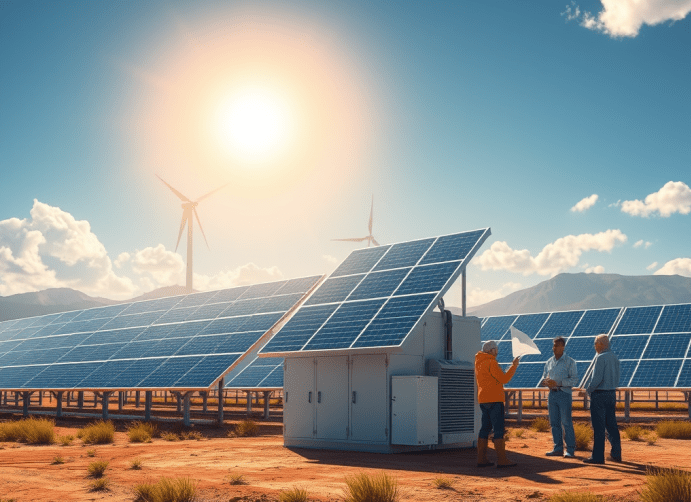
The $890 million commitment will go directly into the immediate development of the country’s grid with the launch of three large-scale solar photovoltaic (PV) plants, as well as a state-of-the-art battery energy storage system (BESS), which will collectively add 716 MW of new export capacity to the grid.
From a business perspective, the BESS aspect plays a vital part. Although solar power serves as a source, the BESS part allows for the release of such power during peak demand times when the grid is most susceptible to failures. This addresses one of the main bottlenecks faced by industries and commercial organisations in South Africa.
The announcement by Mulilo highlights a new shift in the contribution and development of Independent Power Producers (IPPs) in the overall economy of South Africa. As the nation seeks a liberalised energy sector, private capital has become the driving force behind rapid expansion and development. The one-million-dollar investment sends a message to the global investment community that South Africa remains a viable investment option.
Beyond the immediate 716 MW projects, the company is scaling its operations to meet a rigorous growth target: the deployment of one gigawatt (1 GW) of renewable energy per year. A development pipeline that currently exceeds 30 GW backs this ambitious cadence, positioning Mulilo as a cornerstone of the country’s energy transition.
The success of such capital-intensive projects relies heavily on the synergy between the private sector, government regulators, and financial institutions. Seithati Bolipombo, Chief Commercial Officer at Mulilo, emphasised that this investment is about more than just hardware; it is about building the frameworks necessary for a just energy transition.
“We are not only investing capital — we are investing in long-term partnerships that unlock infrastructure, create jobs, and deliver tangible impact where it is needed most,” stated Bolipombo.
This approach focuses on the broader socio-economic benefits of the energy shift, including the creation of specialised jobs and the strengthening of local supply chains. Bolipombo noted that with the right collaboration between industry and regulatory bodies, South Africa can move at the speed and scale required to fully realise the opportunities of a modern, cleaner grid.
For the stakeholders, however, the focus will continue to be on the transition from commitment to construction. Mulilo’s experience in wind, solar, and battery storage projects offers an example of how to successfully manage large-scale projects in the complex South African regulatory landscape.
This investment shows the private sector’s readiness to close the energy gap, provided the regulatory environment continues to support the rapid adoption of renewable energy.
These projects will offer the reliable and clean energy necessary to propel South Africa into the next period of industrial and economic growth.