
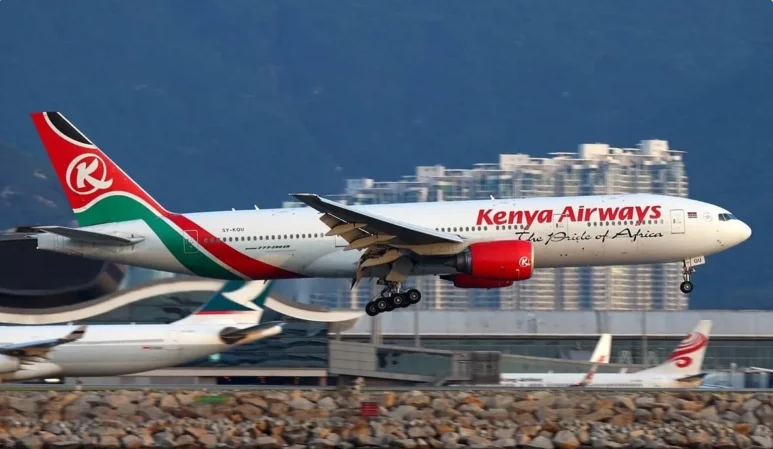
Kenya Airways and Rubis Launch Africa’s First Dedicated SAF Refinery
Kenya Airways and Rubis Energy Kenya have moved to position East Africa at the forefront of sustainable aviation fuel (SAF) production following the signing of an agreement to develop Africa’s first dedicated SAF refinery near Nairobi’s Jomo Kenyatta International Airport.
The proposed facility, expected to require an investment of between $69.8 million and $80 million, will have an annual production capacity of approximately 32,000 metric tonnes of SAF. The agreement was signed during French President Emmanuel Macron’s state visit to Kenya, underscoring the growing strategic alignment between European energy investors and African infrastructure markets.
Located adjacent to one of the region’s busiest aviation corridors, the refinery is expected to strengthen local fuel security while supporting the aviation sector’s decarbonisation agenda. Africa currently lacks a commercial-scale refinery dedicated exclusively to sustainable aviation fuel, leaving airlines largely dependent on imported supply and small-scale pilot programmes.
The project signals a notable shift in the continent’s energy transition landscape, with SAF increasingly emerging as a strategic priority for both airlines and policymakers. Produced from renewable feedstocks including used cooking oil, biomass and agricultural waste, sustainable aviation fuel offers a lower-carbon alternative to conventional jet fuel while remaining compatible with existing aircraft and airport infrastructure.
For Kenya Airways, the development could provide longer-term insulation from fuel price volatility, one of the aviation industry’s most significant cost pressures, while strengthening its environmental credentials as global emissions standards tighten.
The agreement also reflects France’s expanding commercial footprint across Africa’s energy transition sector, particularly in areas linked to clean fuels, industrial infrastructure and low-carbon transport. If successfully implemented, the refinery could establish Kenya as an early regional production hub for sustainable aviation fuel, creating potential export opportunities as international SAF demand accelerates.