Holtec And Rwanda Atomic Energy Board Advance Cooperation Amid Nuclear Push
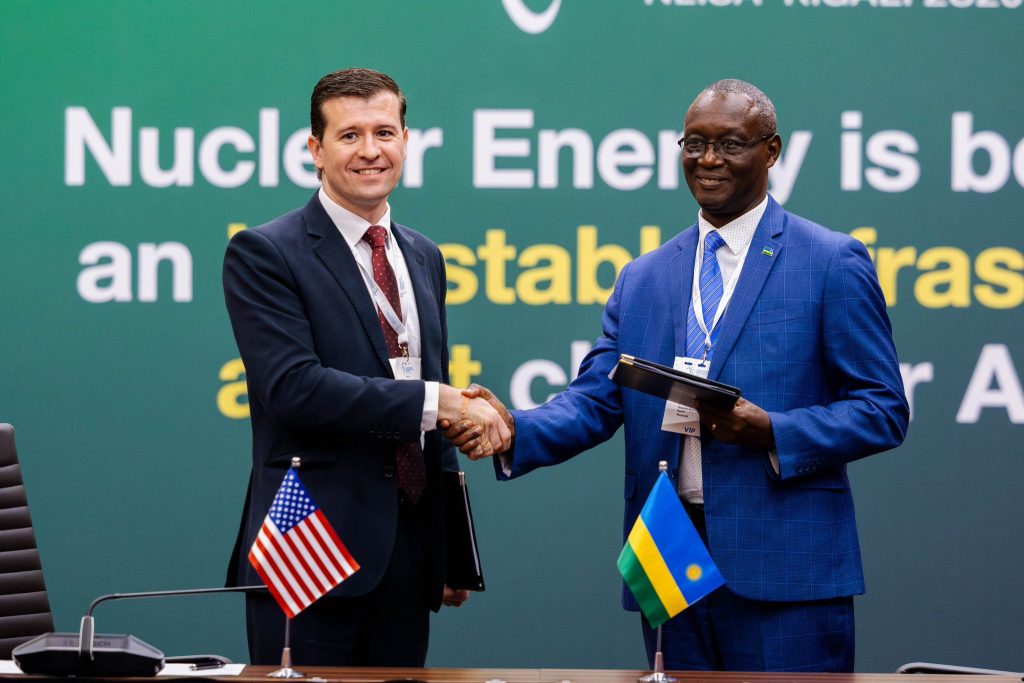
Holtec International and the Rwanda Atomic Energy Board (RAEB) have signed a development agreement to explore the deployment of SMR-300 small modular reactors in Rwanda, signalling a step forward in Kigali’s ambition to establish nuclear power capacity.
Announced during the Nuclear Energy Innovation Summit for Africa in Kigali, the framework outlines potential collaboration on SMR-300 units with a combined capacity of up to around 5 GW. The project is positioned as part of Rwanda’s strategy to secure reliable, low-carbon baseload power to support industrial growth and long-term economic development.
Holtec’s Enterprise Unit Director, Rafael Marin, said the partnership supports Rwanda’s transition towards nuclear generation and could help position the country as an early African adopter of SMR technology. He emphasised the role of nuclear energy in delivering firm, carbon-free electricity at scale.
US Under Secretary of State for Economic Affairs Jacob Helberg described the initiative as a milestone in international nuclear cooperation, highlighting US support for allied countries pursuing advanced nuclear technologies to strengthen energy security and economic development.
Alongside the Holtec agreement, Rwanda and the United States signed a separate memorandum of understanding on civil nuclear cooperation. The US Embassy in Kigali said the deal reinforces collaboration on safe, secure and peaceful nuclear development, with a focus on high standards of safety, security and non-proliferation.
Opening the summit, President Paul Kagame said nuclear energy is becoming central to Africa’s industrial competitiveness. He warned that fragmented national approaches could slow progress and increase costs, calling for stronger regulatory alignment, financing mechanisms and regional integration.
Kagame also pointed to persistent investor concerns around risk and regulatory certainty, stressing the need for credible frameworks to attract long-term capital into large-scale energy projects.
International Atomic Energy Agency (IAEA) Director General Rafael Mariano Grossi presented Rwanda’s Integrated Nuclear Infrastructure Review (INIR) Phase 1 report, confirming progress in building institutional and technical readiness. The RAEB said the findings support advancement to Phase 2 of its nuclear programme.
Grossi also announced expanded cooperation covering energy planning, infrastructure, training and financing, noting that nuclear projects in Africa are becoming increasingly bankable as global financing structures evolve.
Rwanda’s Minister of ICT and Innovation, Paula Ingabire, highlighted the importance of predictable baseload demand from industrial users such as mining, smelting and data centres to ensure project viability.
Holtec’s SMR-300, under development since 2011, is a pressurised water reactor producing around 300 MW of electricity. The company plans the initial deployment of two units in the United States as a reference for future global orders.