
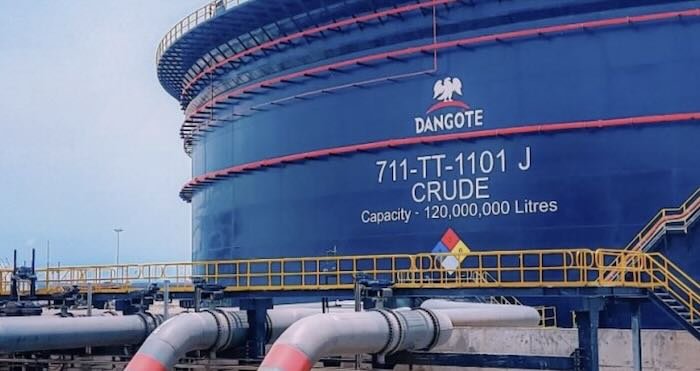
Dangote Refinery Deepens Market Influence with Fresh Fuel Price Cuts in Nigeria
Nigeria’s downstream petroleum market shifted again over the weekend after the Dangote Petroleum Refinery announced fresh cuts to ex-depot fuel prices, reinforcing its growing influence over the country’s refining and fuel supply landscape.
The refinery reduced petrol prices to about US$0.73 per litre from US$0.74, while diesel fell more sharply to approximately US$0.99 per litre from US$1.05 — a 5.6% reduction. The adjustment further strengthens the position of the 650,000-barrel-per-day facility as a major price-setter in Nigeria’s domestic fuel market.
The cuts come as international crude markets show signs of stabilising following renewed diplomatic engagement between the United States and Iran, easing concerns over supply disruption through the Strait of Hormuz. That softer global backdrop has created room for refiners to adjust pricing in key import-dependent markets.
For Nigeria’s economy, the reduction in diesel could have the biggest impact. Diesel remains essential for freight, agriculture, mining, manufacturing and decentralised power generation. With many businesses still reliant on self-generated electricity, lower diesel prices could reduce operating costs and offer modest relief from energy-driven inflation.
The latest pricing move also reflects a broader structural shift in Nigeria’s petroleum sector.
Despite being Africa’s largest crude producer, Nigeria spent decades importing most of its refined fuel, leaving the market exposed to foreign exchange shortages and global price swings. The expansion of Dangote’s refining operations is beginning to reverse that trend, improving domestic supply and reducing reliance on imports.
That transition increasingly sets Nigeria apart from many African markets where fuel prices remain closely tied to imported product costs, weaker currencies, and logistics challenges. Across parts of East and Southern Africa, governments and consumers continue to face exposure to external pricing shocks.
Attention will now turn to whether lower ex-depot prices translate into broader relief at the retail level. Distribution costs and marketer margins will determine how much of the adjustment reaches consumers.
Even so, the latest reduction reinforces Dangote Refinery’s strategic importance to Nigeria’s energy market. As domestic refining capacity strengthens, the facility is emerging as one of Africa’s most consequential energy assets, with growing influence over fuel pricing, supply security and industrial value addition across the continent.