Biogas Expands Beyond Cooking, Powering Zimbabwe’s Agriculture
Zimbabwe’s biogas sector remains small, but its growing application in agriculture is positioning the technology as more than a clean cooking alternative for rural households.
From heating poultry and piglets to powering refrigeration, managing agricultural waste and producing organic fertiliser, biogas is increasingly being viewed as a resource that can connect energy production with agricultural productivity.
The opportunity is significant. Zimbabwe’s 2022 Population and Housing Census recorded 3.82 million households, of which 2.31 million, or 60.6%, relied on firewood as their main cooking fuel. Only 18,464 households—approximately 0.5%—reported biogas as their main cooking fuel. Rural dependence on firewood was particularly high, with 92.9% of rural households using it as their primary cooking energy source.
The figures highlight both the challenge and the market opportunity for decentralised energy technologies such as biogas.
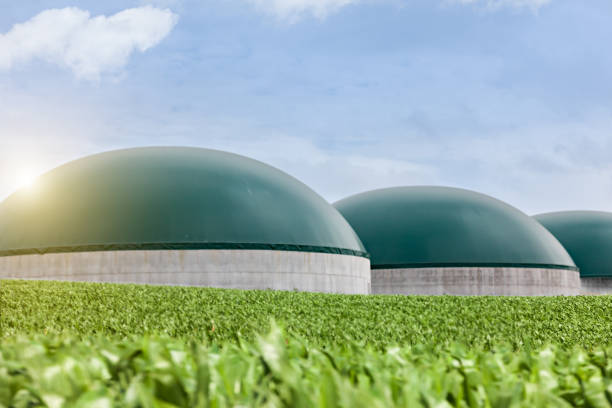
At the Renewable Energy for Agriculture conference, industry participants highlighted how biodigesters can convert livestock manure and other organic waste into an energy resource for farmers, providing heating for chicks and piglets, reducing farmers’ dependence on charcoal and electricity. It can also be used to power cooling and refrigeration equipment, helping farmers preserve milk, meat, vegetables and other agricultural products in areas where grid electricity is unreliable or unavailable.
This could have implications beyond household energy access.
For farmers, reliable cooling can reduce post-harvest losses and extend the period in which agricultural products can be stored and sold. Energy generated from waste can therefore become an input into agricultural production rather than simply a replacement for firewood.
The process also produces digestate, a nutrient-rich by-product that can be applied to agricultural land as an organic fertiliser.
This creates a circular model: livestock and agricultural waste can be converted into biogas, the gas can provide energy for the farm, while the remaining digestate can return nutrients to the soil.
Rural Energy Opportunity
The potential is particularly relevant to rural Zimbabwe, where access to electricity remains significantly lower than in urban areas.
The World Bank’s Zimbabwe National Energy Compact, drawing on the 2022 Census, reports that 62% of the population had access to electricity, but only 33.7% of households were connected to the grid, while 28.3% relied on off-grid electricity. The same assessment reports that 91% of households without access to electricity are in rural areas.
This creates an opening for decentralised energy systems that can operate independently off the national grid.
Biogas digesters can be particularly suited to livestock-producing households because the feedstock is generated locally. According to Lanforce Energy, a six-cubic-metre digester can serve a household of roughly four to six people where sufficient feedstock is available. She cited minimum requirements of around two confined cattle, or approximately five cattle where animals are grazing, while pig manure, poultry waste and food waste can also be used.
Larger agricultural operations could take the concept further.
Biogas can be upgraded and used to generate electricity, although this requires larger digesters, sufficient feedstock and additional gas-cleaning equipment. There are also opportunities for municipalities to collaborate with large farms to use organic waste for larger-scale energy generation.
Zimbabwe already has evidence that this is technically possible. A ZERA-supported 5m³ biogas digester in Budiriro uses cow dung from the City of Harare farm and has been used for cooking, lighting and electricity generation through a 2kW biogas generator.
A Sector Still in Its Early Stages
Despite the potential, biogas remains a marginal energy source nationally.
Research shows that 333 biogas digesters had been constructed, alongside the training of 300 biogas masons. Earlier research identified around 711 biogas plants in Zimbabwe in 2017, including household, institutional and municipal facilities, illustrating the sector’s long-standing but relatively limited deployment. The gap between potential and adoption is largely financial and institutional.
The high upfront cost of digesters, limited access to commercial finance, insufficient consumer awareness and weak after-sales support as barriers to expansion. For smaller rural households, the initial investment can be difficult to justify even when the technology can reduce expenditure on firewood, charcoal, LPG or electricity over time.
Financing models will therefore be critical if biogas is to move beyond individual projects and become a scalable rural energy market.
Blended finance, concessional lending, grants, carbon finance and pay-as-you-go models could help reduce the upfront burden on households and farmers while allowing developers to build commercially sustainable businesses. For Zimbabwe’s rural economy, this combination could make biogas relevant not only to household energy access, but also to agricultural productivity, waste management, climate resilience and rural enterprise development.
**This article was developed from discussions during a panel session on biogas and clean cooking solutions at the Renewable Energy for Agriculture (RE4Agri) Conference 2026 in Harare, Zimbabwe.