Afrox Locks In Renewable Power For Cape Town’s ASU
Industrial gases producer Afrox has secured a decade-long renewable energy supply agreement with Discovery Green, marking another significant shift towards cleaner industrial operations in South Africa’s energy-intensive manufacturing sector.
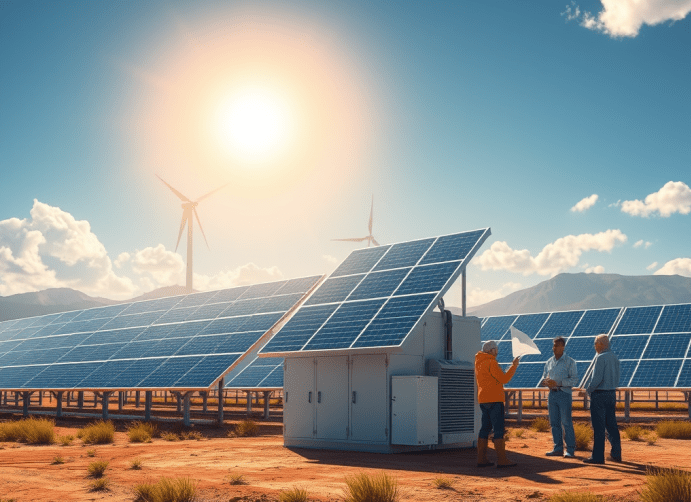
The agreement will see Discovery Green supply approximately 28GWh of renewable electricity annually to Afrox’s air separation unit (ASU) in Kuils River, Cape Town, beginning in April 2028. The power will be sourced from a diversified portfolio of wind and solar assets located across the Western Cape, Mpumalanga and the Free State.
For Afrox, a subsidiary of global industrial gases group Linde, the move forms part of a broader strategy to decarbonise operations while strengthening energy resilience in an evolving South African electricity market.
The company estimates the transition will cut operational emissions by around 25,000 tonnes of CO₂ equivalent annually, primarily through reductions in Scope 2 emissions linked to purchased electricity consumption.
Afrox Managing Director Ferdinand Kuehner said the agreement aligns with the company’s ambition to deliver industrial gases with a lower carbon footprint while adapting to structural changes within the country’s power sector.
South Africa’s industrial users are increasingly turning to long-term PPAs as grid instability, rising electricity costs and decarbonisation pressures reshape procurement strategies. Renewable energy agreements are also becoming central to ESG commitments and export competitiveness, particularly for manufacturers supplying international markets with tightening carbon compliance requirements.
Discovery Green said its renewable portfolio, which currently exceeds 700MW in generation capacity, is designed to provide industrial customers with supply reliability, pricing stability and operational flexibility.
The Kuils River ASU, commissioned in 2019, has a production capacity of 188 tonnes per day and plays a key role in supplying gases to healthcare, manufacturing and industrial customers in the Western Cape.
The deal also reflects the growing momentum behind South Africa’s energy transition. Industry estimates suggest the country will require roughly 60GW of renewable generation capacity by 2030 to sustain projected economic growth while easing dependence on coal-fired power.