
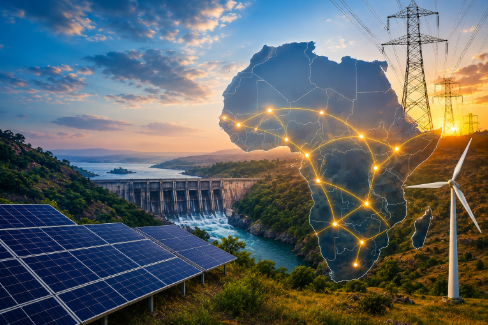
Africa’s Regional Power Markets Gain Momentum
Africa’s ambition to deliver universal electricity access is increasingly being shaped by regional cooperation rather than isolated national investment. As governments pursue the goal of connecting 300 million people to electricity by 2030 under Mission 300, policymakers and financiers are placing greater emphasis on cross-border electricity trade as a cost-effective solution to strengthen energy security and accelerate the clean energy transition.
Despite the continent’s vast renewable energy resources, many countries continue to rely on costly thermal generation and diesel-powered backup systems, while neighbouring markets possess surplus hydropower and growing renewable capacity. Expanding electricity trading through interconnected regional grids offers an opportunity to balance supply and demand, reduce generation costs and improve grid reliability across multiple countries.
The African Union’s African Single Electricity Market (AfSEM) and AUDA-NEPAD’s Continental Master Plan are providing the strategic framework for a more integrated electricity system. Together, they aim to harmonise regulations, coordinate transmission planning and create a continent-wide market capable of supporting long-term economic growth.
New financing models are also helping remove long-standing barriers to regional electricity trade. Innovative market intermediaries such as Africa GreenCo are reducing payment risk for independent power producers by acting as creditworthy power purchasers, limiting reliance on sovereign guarantees and improving project bankability.
Meanwhile, investment in transmission infrastructure is gathering pace. Projects such as the Mozambique-Malawi interconnector and the proposed Regional Transmission Infrastructure Financing Facility (RTIFF) are designed to strengthen regional grids and unlock larger volumes of cross-border electricity trading, particularly within the Southern African Power Pool (SAPP).
Regional power pools across Southern, Eastern and Western Africa are also advancing market reforms, introducing new trading mechanisms and expanding opportunities for utilities and large electricity consumers to procure power across borders. These developments are expected to improve competition, diversify supply and encourage greater private sector participation.
Development finance institutions, including the African Development Bank, continue to play a central role by supporting policy reforms, financing transmission projects and developing innovative financial instruments that reduce investment risk.
As Africa’s electricity sector evolves, the focus is shifting from building isolated national systems towards creating interconnected regional markets. Strengthening transmission networks, harmonising regulations and attracting private investment will be essential to delivering affordable, reliable and sustainable electricity across the continent.