
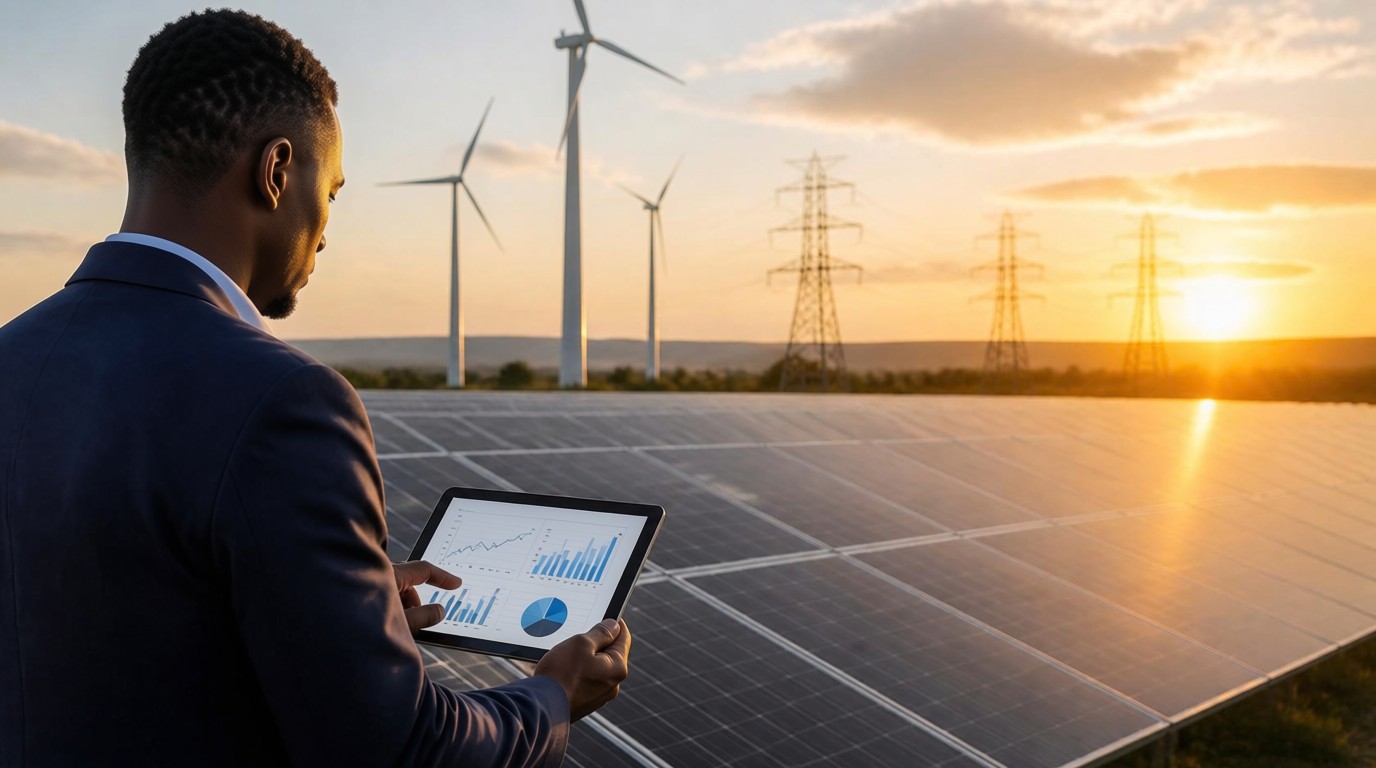
Africa’s Grid Challenge: Who Will Finance Africa’s Next Grid Build-Out?
Africa’s energy transition is confronting a challenge that cannot be solved by building more power plants alone. Across the continent, new generation capacity will only deliver its full economic value if there is enough transmission and distribution infrastructure to move electricity to homes, businesses and industry.
The problem is increasingly one of capital. Around 600 million people in sub-Saharan Africa still lack access to electricity, while investment in electricity networks remains far below what is required to achieve universal access and integrate growing volumes of renewable generation.
Public finance cannot close the gap alone. The greater challenge is making Africa’s grid projects attractive enough for commercial capital to participate.
This is where blended finance can play a critical role. By combining concessional funding from governments and development finance institutions (DFIs) with commercial investment, financing structures can reduce the risks that have historically kept private capital away from large infrastructure projects.
DFIs can provide guarantees, risk-sharing instruments, concessional loans and project-preparation support, helping to address risks ranging from weak project pipelines to currency exposure and regulatory uncertainty. Initiatives such as Mission 300, led by the World Bank and African Development Bank, demonstrate the growing effort to combine development finance with private-sector mobilisation to expand electricity access across Africa.
But international capital is not the only opportunity. Africa holds significant pools of domestic institutional capital, including pension funds, insurers, sovereign wealth funds and development banks. The Africa Finance Corporation has estimated that more than $1.1 trillion in institutional capital is available across the continent.
Unlocking that capital, however, will require more than simply inviting investors to participate. Governments must develop bankable projects, establish predictable regulatory frameworks and create financing structures that can manage long-term, currency and political risks.
International markets offer potential lessons. European institutions have increasingly used guarantees and public co-investment to encourage private lenders to participate in infrastructure projects. For Africa, similar approaches could help turn commercially marginal grid projects into investable assets.
The question, therefore, is not simply whether Africa has enough money to finance its grid. It is whether governments, DFIs and private investors can create the structures needed to put that capital to work at scale.
That question will take centre stage at Resq Energy Hub’s upcoming webinar, “Africa’s Grid Challenge: The Missing Link in the Energy Transition,” on 15 October 2026. Industry experts will examine how DFIs, pension funds, sovereign wealth funds and private investors can help finance Africa’s next generation of transmission and energy infrastructure.
Register now to join the discussion on who will finance Africa’s next grid build-out—and what it will take to make these projects investable.