
Africa’s Energy Access Push Gains Pace as Kenya Leads Renewables Investment Hub
Africa’s power sector faces a widening urgency to convert policy momentum into delivered megawatts, as industry leaders warn that the continent’s energy access deficit remains stubbornly high despite improving investment conditions.
At the Energy Access Investment Forum 2026 in Nairobi, convened by the Alliance for Rural Electrification, stakeholders from across the value chain called for faster execution of projects and stronger pipelines of bankable opportunities. The consensus: capital is increasingly available, but deployment continues to lag.
David Lecoque stressed that closing the access gap must now move from ambition to delivery, with renewables offering the most cost-effective route. Solar, hydropower and geothermal resources, he noted, position Africa competitively in a decarbonising global energy system.
From a financing perspective, the European Union signalled an expanded role through its Global Gateway platform, which blends grants with concessional lending to support large-scale energy infrastructure. However, Henriette Geiger cautioned that regulatory certainty remains a prerequisite for crowding in private capital at scale.
Structural bottlenecks persist. The Common Market for Eastern and Southern Africa highlighted a persistent failure rate in project development, with a significant proportion of initiatives failing to progress from feasibility to financial close. Mohamed Kadah pointed to weak project preparation as a critical constraint, limiting Africa’s ability to capture a greater share of global energy investment flows.
Development finance institutions are stepping in to bridge this gap. The African Development Bank, via the Sustainable Energy Fund for Africa, is expanding the use of concessional finance, guarantees and technical assistance to improve project bankability and mitigate risk exposure for investors. João Duarte Cunha underscored the importance of aligning policy reform with financial structuring to unlock private sector participation.
Meanwhile, corporates including Schneider Electric are scaling investment into distributed and decentralised solutions, targeting underserved and off-grid markets. Anna Coby noted continued efforts to close early-stage financing gaps for energy access enterprises.
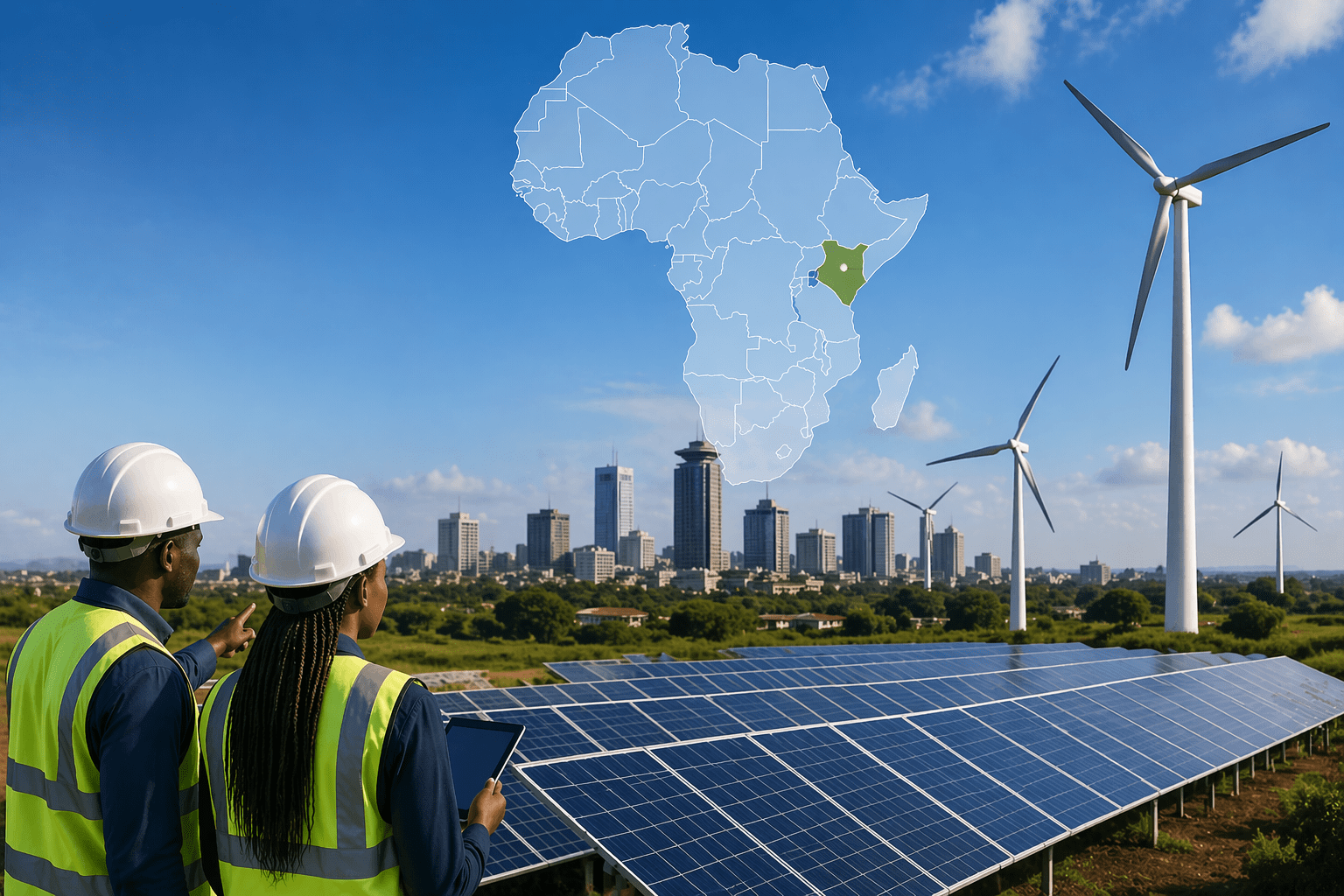
Against this backdrop, Kenya is consolidating its position as a regional benchmark for renewable energy deployment. With a generation mix heavily weighted towards geothermal, hydro, wind and solar, the country offers a case study in how regulatory clarity and targeted investment frameworks can translate resource potential into operational capacity.
For the wider continent, the message from Nairobi is clear: the challenge is no longer defining the pathway to universal access, but accelerating execution at scale.