
African Leaders Rally Capital for Energy and Industrial Growth at AfDB Annual Meetings
African heads of state used the opening of the 2026 Annual Meetings of the African Development Bank Group in Brazzaville to sharpen calls for accelerated investment in energy infrastructure, industrial expansion and climate-linked projects, with leaders emphasising the need to unlock greater private capital to support Africa’s long-term growth.
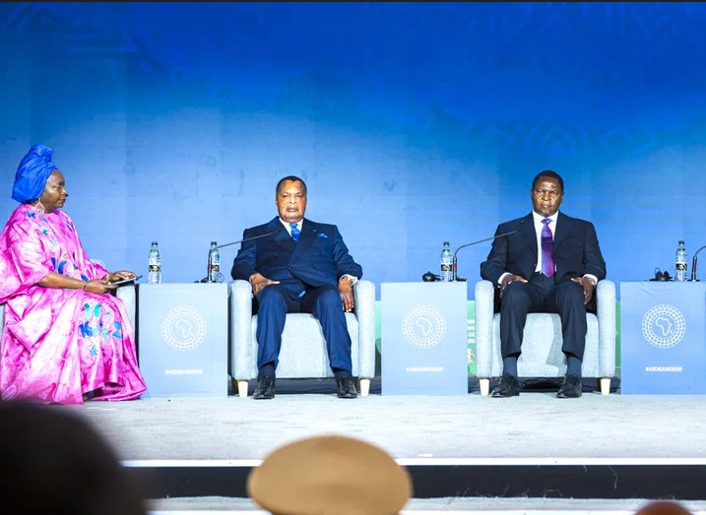
The presidential dialogue, held on Tuesday at the Kintélé Conference Centre in the Republic of the Congo, brought together President Denis Sassou Nguesso, President Brice Oligui Nguema of Gabon, President Faustin-Archange Touadéra of the Central African Republic, and AfDB President Sidi Ould Tah. The session formed part of the Bank’s annual gathering under the theme: “Mobilising Africa’s Development Financing at Scale in a Fragmented World.”
Energy security and industrial development featured prominently throughout the discussion, with leaders framing a reliable power supply as a prerequisite for economic diversification and regional competitiveness.
President Nguesso reaffirmed Congo’s intention to broaden its economy beyond hydrocarbons while maintaining oil and gas as a core pillar of state revenues. He highlighted plans to monetise the country’s significant reserves of potash, phosphate and natural gas through fertiliser production, positioning Congo as a strategic supplier to domestic and export agricultural markets.
He also underscored the role of electricity infrastructure in supporting industrialisation, pointing to the hydropower potential of the Congo River basin and ongoing cooperation with the AfDB on regional transmission and generation projects.
“Development cannot happen without energy,” Nguesso said, reinforcing a view increasingly shared across the continent as African governments seek to close electricity access gaps while expanding industrial output.
In Gabon, President Nguema outlined a development strategy centred on converting the country’s natural-resource base and environmental assets into long-term economic value. While much of the focus was on biodiversity finance and conservation-linked investment, he also called for stronger international financial recognition for countries in the Congo Basin protecting critical forest ecosystems.
Nguema said Gabon was advancing a national carbon-credit framework and strengthening institutional capacity to market environmental credits internationally, while balancing conservation priorities with economic growth.
For the Central African Republic, Touadéra positioned infrastructure investment, particularly transport links, electricity generation and regional connectivity, as essential to unlocking investor interest in landlocked markets.
He reiterated support for Mission 300, the flagship initiative led jointly by the African Development Bank Group and the World Bank Group aimed at expanding electricity access to 300 million Africans by 2030.
Speaking on Africa’s financing requirements, AfDB President Sidi Ould Tah said the continent’s capital challenge was not solely about external funding but also about better structuring projects to attract investment.
He pointed to an estimated US$4 trillion in African-held financial resources that could be mobilised more effectively through stronger financial institutions, improved project preparation and more bankable infrastructure pipelines.
According to Tah, the Bank will prioritise creating investment-ready opportunities while strengthening investor protections and partnerships that can crowd in both domestic and foreign direct investment.
The discussion also repeatedly returned to workforce development, with panellists linking Africa’s industrial ambitions, including energy transition, infrastructure delivery and engineering capacity, to long-term investment in technical skills and education.
For the energy sector, the message from Brazzaville was clear: African governments are increasingly aligning energy expansion, industrialisation and climate finance under one investment narrative, and are looking to development finance institutions and private investors alike to help move large-scale projects from pipeline to execution.