Africa and Europe Target Green Industrial Investment at COP31
African and European policymakers are seeking to strengthen investment and technology partnerships to accelerate Africa’s transition from a supplier of raw energy resources and critical minerals into a competitive clean energy manufacturing hub.
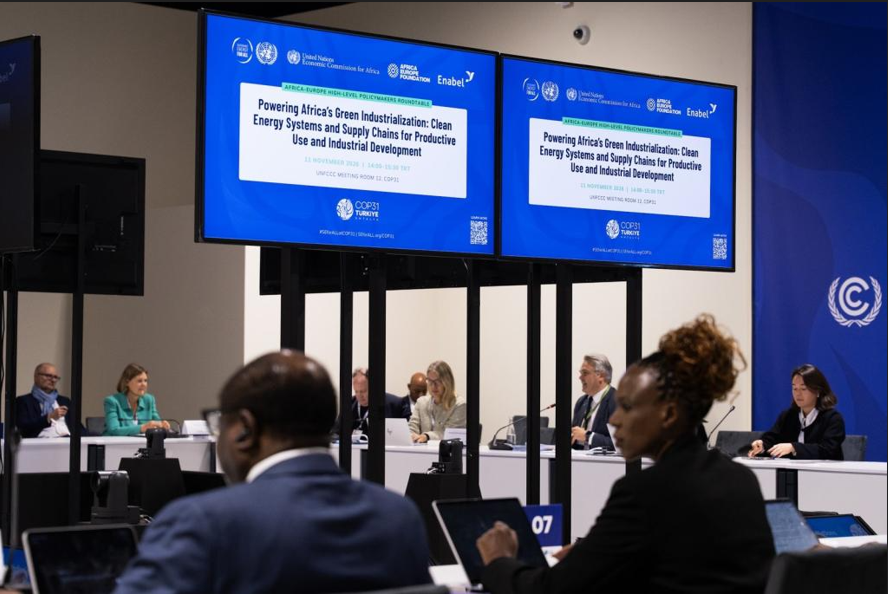
The call emerged during a high-level roundtable at COP31 in Antalya, Türkiye, where government representatives, development finance institutions and private sector leaders examined opportunities to link energy access, industrialisation and job creation.
Co-chaired by Damilola Ogunbiyi, CEO and Special Representative of the UN Secretary-General for Sustainable Energy for All, and Mattias Frumerie, Sweden’s Climate Ambassador, the discussions highlighted the need to translate Africa’s renewable energy potential into tangible economic value.
A key concern was the continent’s continued reliance on raw mineral exports. According to event organisers, at least 13 African countries have introduced restrictions on raw mineral exports since 2023, reflecting growing efforts to retain more value through domestic processing and manufacturing.
However, realising this ambition will require reliable and affordable electricity. With approximately 655 million people worldwide still without electricity, more than 80% of them in Africa, participants stressed that expanding energy access must go hand in hand with improving power reliability for businesses and industrial operations.
Discussions highlighted the importance of advancing both first-time electrification and the wider use of electricity across manufacturing, transport and buildings. Together, these priorities could create new industrial opportunities while supporting economic growth.
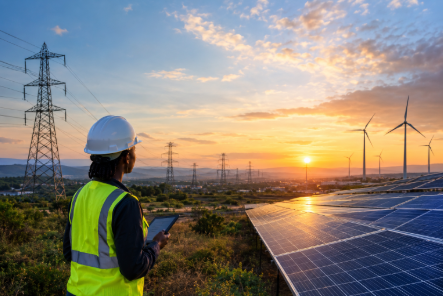
Africa’s wind, solar, hydro and geothermal resources, alongside its critical mineral reserves, were identified as strategic advantages for developing local clean technology manufacturing and strengthening regional industrial value chains.
Existing initiatives, including Mission 300, the African Single Electricity Market and the Continental Power System Master Plan, were highlighted as important mechanisms for expanding electricity access and improving regional power integration.
Europe’s contribution is being channelled through the Africa-EU Green Energy Initiative, under the Global Gateway Investment Package, which targets an additional 50GW of renewable energy capacity and electricity access for 100 million Africans by 2030.
Participants also identified carbon markets under Article 6 of the Paris Agreement as a potential source of investment, alongside stronger international partnerships to mobilise finance and technology transfer.
Looking ahead, priorities include scaling financing for clean energy and industrial development, expanding local manufacturing capacity and building strategic industrial value chains.
With COP32 scheduled for Addis Ababa, Ethiopia, the discussions reinforced the importance of placing green industrialisation at the centre of Africa-Europe energy cooperation.