
Gabon Advances Energy Compact Under Mission 300
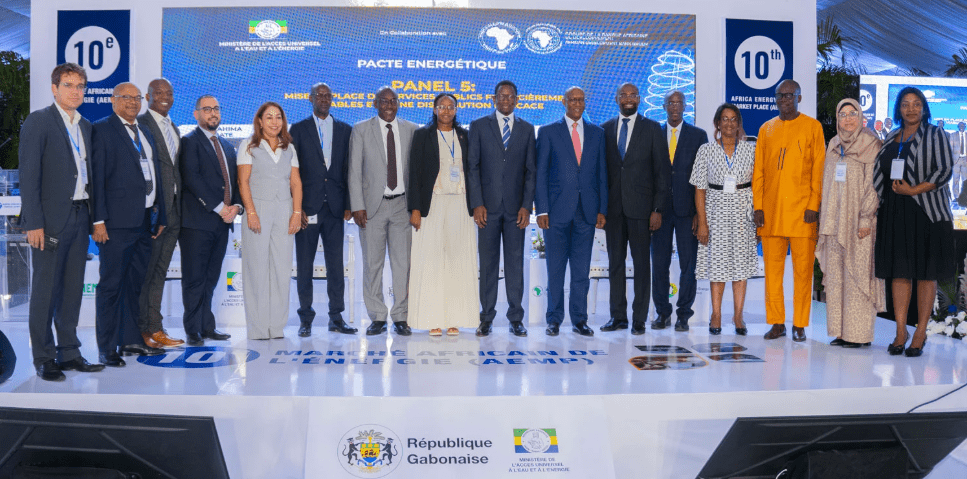
The African Development Bank Group, in partnership with the Government of Gabon, has concluded the 10th Africa Energy Market Place in Libreville, reinforcing efforts to accelerate investment and reform in Gabon’s power sector.
The two-day forum, held on 8–9 April 2026, convened policymakers, financiers and private sector stakeholders to advance delivery under Mission 300—a joint programme with the World Bank Group aimed at connecting 300 million Africans to electricity by 2030. The African Development Bank has committed to contributing 50 million connections.
Gabon’s participation marks the 25th country engagement under the AEMP platform, which operates as the Bank’s flagship policy dialogue mechanism for energy sector reform. Discussions in Libreville centred on aligning the country’s draft National Energy Compact with investment priorities and implementation pathways.
The Compact is structured around five pillars: expanding generation capacity and modernising grid infrastructure; advancing regional integration through the Economic Community of Central African States, Central African Economic and Monetary Community and the Central African Power Pool; scaling distributed renewable energy and clean cooking solutions; mobilising private capital through innovative financing and PPPs; and strengthening governance and financial performance at Société d’Energie et d’Eau du Gabon.
While Gabon reports relatively high access rates—around 94% for electricity and 90% for clean cooking—coverage remains uneven, with rural areas underserved. Structural inefficiencies persist due to four isolated grid systems, limiting optimal power distribution. Interconnection of these networks and integration into the regional power pool were identified as critical to improving reliability, efficiency and long-term energy security.
Key outcomes from the forum include a Gabon Energy Access Investment Brief aligned with Mission 300, agreement on priority projects in grid expansion and decentralised renewables, and draft policy and regulatory reforms with defined timelines. The government is also set to establish a Compact Delivery and Monitoring Unit to oversee implementation and ensure accountability.
The forum was co-convened with development and industry partners, including the World Bank Group, ECCAS, the Central African Power Pool, Sustainable Energy for All, the Africa Minigrids Developers Association and the Africa Renewable Energy Initiative, underscoring the role of coordinated, multi-stakeholder approaches in advancing Africa’s energy transition.