Nigeria and South Africa Advance Strategic Energy Partnership Amid Push for Continental Integration
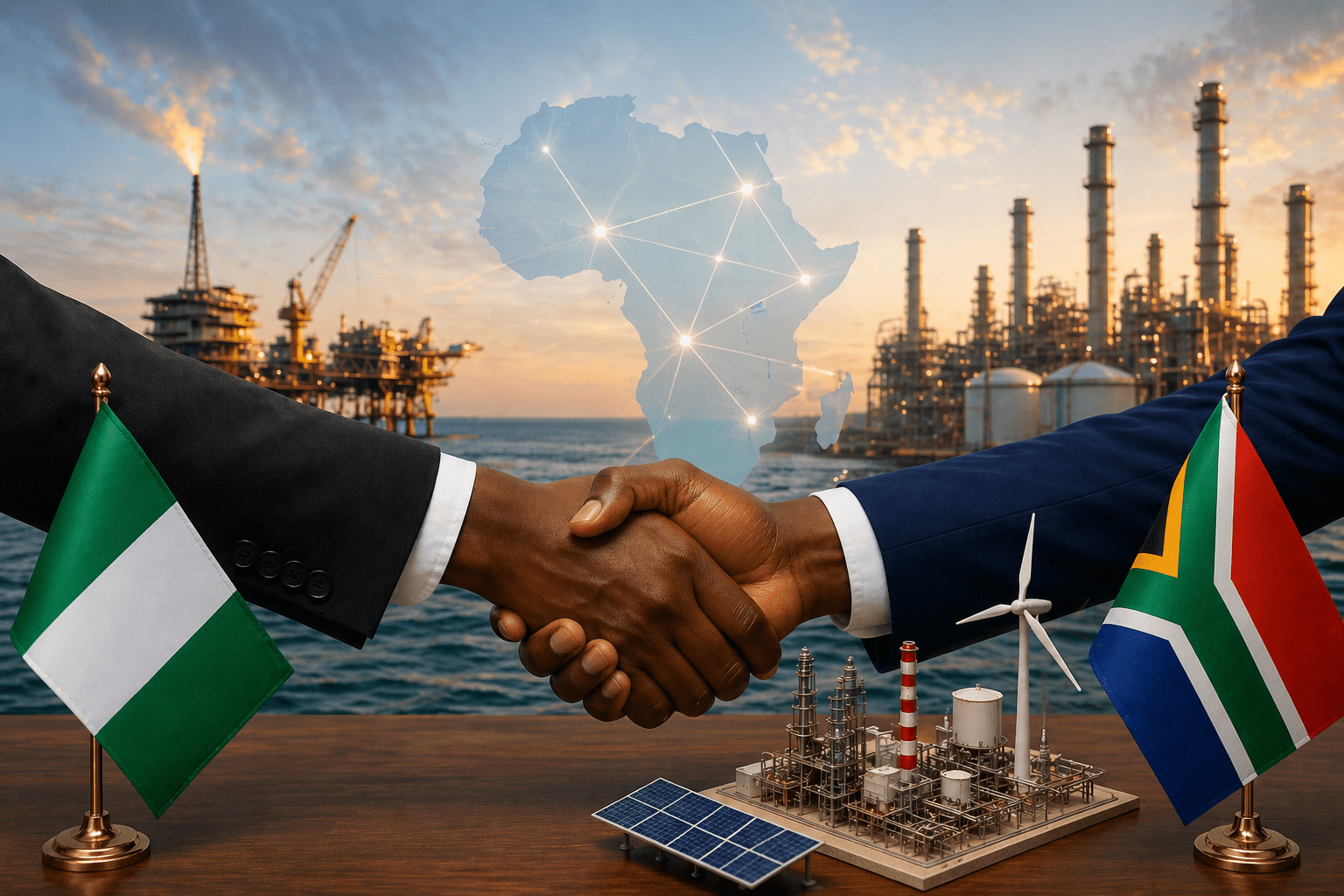
Nigeria and South Africa are stepping up efforts to deepen bilateral cooperation in the energy sector, signalling a coordinated push towards strengthening Africa’s long-term energy security and investment attractiveness.
The initiative was underscored at the South Africa Energy Collaboration Breakfast Roundtable in Lagos, convened in partnership with the Africa Energy Chamber, where senior officials and industry stakeholders examined pathways for closer integration between the continent’s two largest economies.
South Africa’s Deputy Minister of International Relations and Cooperation, Thandi Moraka, said both countries must leverage their complementary strengths to build a more resilient and self-sustaining African energy system, anchored in collaboration rather than fragmentation.
She argued that energy has become a central pillar of foreign policy and economic competitiveness, noting that reliable supply remains a prerequisite for attracting foreign direct investment into emerging markets.
Nigeria’s substantial oil and gas reserves, she said, position it as a critical strategic partner in advancing continental energy security objectives. The focus, she added, should now shift towards deliberate coordination that aligns national resources with broader African priorities.
Moraka called for stronger institutional frameworks between Abuja and Pretoria, particularly within the African Union architecture, to support joint planning, investment mobilisation, and infrastructure development across the energy value chain.
She also highlighted the need for regulatory alignment and policy coherence to reduce friction in cross-border trade and energy cooperation. According to her, improved harmonisation would help unlock efficiencies and encourage greater private sector participation.
The Deputy Minister further emphasised the importance of leveraging the African Continental Free Trade Area to facilitate smoother movement of energy commodities, technologies and related services across regional markets.
She noted that reducing trade barriers between African economies would be essential to scaling up cross-border energy projects and attracting long-term investment into both conventional and renewable energy systems.
Nigeria’s refining capacity was also identified as a key strategic asset in enhancing Africa’s energy independence. Moraka pointed to its potential to reduce reliance on imported petroleum products while strengthening the continent’s position in global energy markets.
In the context of heightened geopolitical uncertainty and disruptions to global supply chains, she said African cooperation in energy production and distribution had become increasingly urgent.
Logistics infrastructure was another priority area highlighted during the discussions. Moraka stressed the need to improve transport and port systems between the two countries to support more efficient energy trade flows.
She said enhanced connectivity would be essential for enabling industrial cooperation, particularly in oil, gas and emerging energy technologies.
According to her, deeper collaboration between South Africa and Nigeria could deliver broader economic dividends, including industrialisation, job creation and improved regional resilience.
The roundtable formed part of South Africa Focus Week in Lagos, an annual engagement platform aimed at strengthening bilateral relations and expanding economic cooperation. The programme is organised by the South African Consulate General in Lagos in partnership with Brand South Africa and the Development Bank of Southern Africa.
The discussions reflect a growing recognition among policymakers that Africa’s energy future will increasingly depend on regional integration, coordinated infrastructure development, and sustained public–private collaboration.