
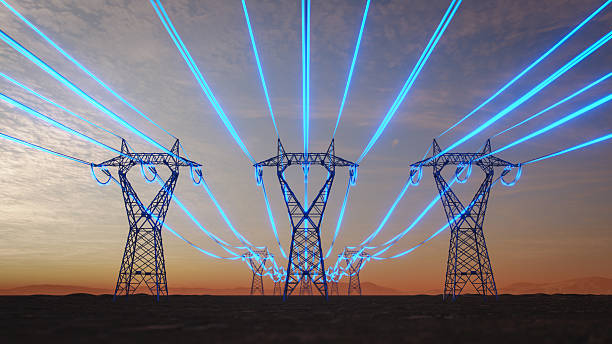
ABB Simplifies Complex Grid Protection Workflows With New Digital Solution
As distributed energy resources (DERs expand across global and African power systems, the challenge of ensuring grid compliance and stability is intensifying. ABB has introduced a digital solution aimed at reducing this complexity in grid-feeding protection system design.
Its Application Configurator allows engineers to generate a fully validated bill of materials in minutes—replacing a traditionally time-intensive process reliant on manual review of technical catalogues and datasheets.
Rising DER penetration is reshaping grid dynamics and exposing infrastructure limitations. Protection systems must now account for diverse grid codes, architectures and regional standards, increasing the engineering burden. Delivering flexible, compliant designs within tight project timelines has become a key industry challenge.
South Africa highlights the dual nature of the energy transition. While renewable capacity is growing rapidly, grid constraints remain a barrier to integration. A long-term transmission expansion programme—focused on new lines and increased transformer capacity—is underway to ease congestion and improve connection capacity.
Although national loadshedding has been suspended since March 2024, localised load reduction persists in constrained areas. In this environment, effective grid-feeding protection is essential to maintain system stability and protect infrastructure during peak demand or network stress.
If DERs remain connected during faults, they can exacerbate disturbances and trigger wider system failures. Modern protection systems mitigate this risk by detecting voltage and frequency deviations and automatically disconnecting distributed assets, preserving grid integrity and ensuring safety.
ABB’s Application Configurator introduces a structured, automated workflow. Using project-specific inputs—such as grid code requirements, generation capacity and inverter specifications—the tool defines an optimal system architecture.
It then recommends appropriate protection devices, relays, disconnectors and communication components, while automatically validating selectivity, coordination, short-circuit ratings and compatibility. Engineers can adjust configurations in real time, with outputs updating instantly.
The result is a fully validated, project-specific configuration delivered in a fraction of the time.
As DER deployment accelerates, digital engineering tools are becoming essential to streamline system design, reduce risk and support faster grid integration.